AGIBOT Wins the Robot Olympics 2026, and Then Some
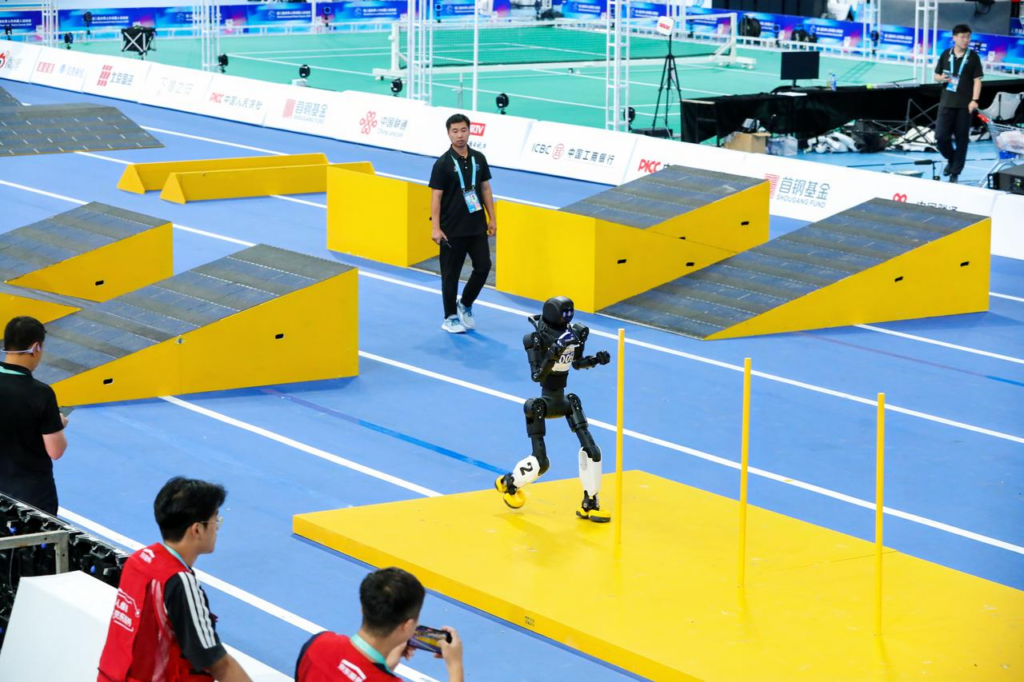
Last week, the 2nd World Humanoid Robot Games closed in Beijing, and we have to admit: this is one of those events we genuinely enjoyed watching. Thousands of humanoid robots sprinting, playing football, assembling tools, and, sometimes a little less gracefully, falling over. But behind the spectacle is a story worth pausing on for anyone working with this technology.
Our manufacturer wins, and not by a small margin
AGIBOT, the manufacturer behind the robots we rent out at RaaSX, made an impressive debut at the Games. The company took home 46 medals in total: 18 gold, 16 silver and 12 bronze, topping both the gold and overall medal tables. What stood out to us most: those medals didn't come from the flashy sprint events, but from categories much closer to real work. Think precision hand manipulation via the OmniHand system, practical scenarios like hotel service and library management, and obstacle courses with the X2 platform.
That is no coincidence. The organizers reward fully autonomous task completion with double the points compared to tasks where a human still assists. In other words, a robot doing it on its own literally counts twice as much as one that gets help. AGIBOT scored primarily in that first category, and that says something.
The pace of progress is the real story
What surprised us most wasn't who won, but how fast the underlying technology is developing. Last year, the fastest robot ran the 100 metres in 21.5 seconds, a time an enthusiastic amateur could probably still beat. This year, a robot from a different manufacturer dipped under 8.64 seconds, faster than Usain Bolt's world record. That is not a small improvement; it is nearly halving the time within twelve months.
Progress was rapid elsewhere too: the high jump went from nothing noteworthy to 2.88 metres (the human record stands at 2.45 metres), and the long jump rose from 1.25 metres last year to 4.83 metres this year. The number of participants nearly quadrupled, from 500 robots to more than 2,000. And in the new dexterous-hand categories, the winners achieved a precision of 0.1 millimetres, roughly what a human can do with their fingers.
Why this is more than just a fun sporting event
The organizers make no secret of the fact that this is about more than entertainment. Jiang Guangzhi, one of the directors behind the Games, put it aptly: once robots master these "last-meter" skills, medals turn into orders. Competition results are slowly becoming the benchmark on which companies base their procurement decisions.
That is also exactly what matters for companies looking to work with these robots: not whether a robot looks impressive, but whether it can reliably and independently carry out a task in a warehouse, shop or care facility. The sprint records make a nice headline, but running in a straight line on a flat track is relatively simple compared to grasping, sorting and finding your way through a cluttered, unpredictable space. And that is precisely where AGIBOT excelled this year.
A small caveat
We don't want to pretend everything is already solved. The sprint times are not recognised by World Athletics, the robots start differently from humans, and teleoperation is still permitted in weightlifting because stability under variable load simply isn't solved autonomously everywhere yet: one robot even lost its balance during the Games while holding a 15-kilogram weight. But that makes AGIBOT's scenario-based results all the more interesting: they measure what actually matters in practice, and that is where our supplier won convincingly.
Source: Tech Times, "Tiangong Ultra Ends Robot Games at 8.64s While AGIBOT Tops Overall Medal Table" (August 27, 2026); Gizmochina, "AGIBOT Wins 46 Medals at World Humanoid Robot Games" (August 27, 2026).
Want to know more about the robots themselves? See every AGIBOT model, price and rental option in the Benelux.