AGIBOT WORLD 2026 Physical Reasoning: Robots Learn to Decide What to Do
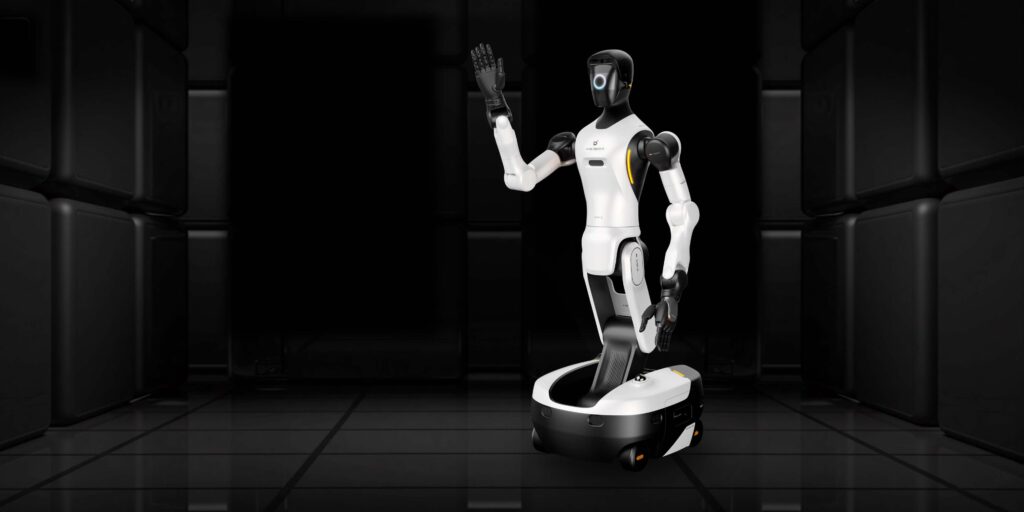
AGIBOT, the manufacturer behind the humanoid robots RaaSX offers as its Benelux partner, has released the fourth edition of its open-source dataset AGIBOT WORLD 2026: Physical Reasoning. According to AGIBOT, it is the first real-world dataset for Physical Agents: robots that do not just carry out an action, but work out what the situation requires. The release is the opening act of AI WAVE, the series in which AGIBOT showcases its AI work, from data and models to real-world applications.
From difficult actions to difficult decisions
Earlier robot datasets mostly focused on how a robot does something: picking up an object, opening a drawer, moving a box. Physical Reasoning shifts the focus to what the robot should do. AGIBOT describes it as a move from operation difficulty to decision difficulty. The tasks are designed so the robot decides, based on conditions on site, what to do, what to do first and what to do next.
That sounds simple, but it is exactly where robots often get stuck in practice. A robot that can pick up a bottle flawlessly still does not know which bottle needs to go and which one should stay.
Nine reasoning abilities
AGIBOT organises the dataset around nine abilities of increasing complexity:
- Choosing by attributes: selecting the right object by features such as colour, shape or contents.
- Choosing by context: making a choice that fits the situation.
- Judging feasibility: assessing whether an action is possible right now.
- Recognising prerequisites: seeing which step has to come first.
- Goal-directed search: looking for what is needed to reach the goal.
- Tracking states and quantities: knowing how much there is and what has changed.
- Planning longer sequences: keeping track of a task with many steps.
- Remembering what has been done: avoiding duplicate work.
- Ordering subtasks: choosing the right sequence.
What it looks like in practice
The examples in the dataset could come straight from a hotel, office or shop:
- Restocking a minibar until there are three full bottles. The robot first has to see what is there, remove empty bottles and add exactly enough new ones.
- Retrieving a key from behind a box. Sometimes the box has to be moved first.
- Searching drawers while remembering which ones have already been checked.
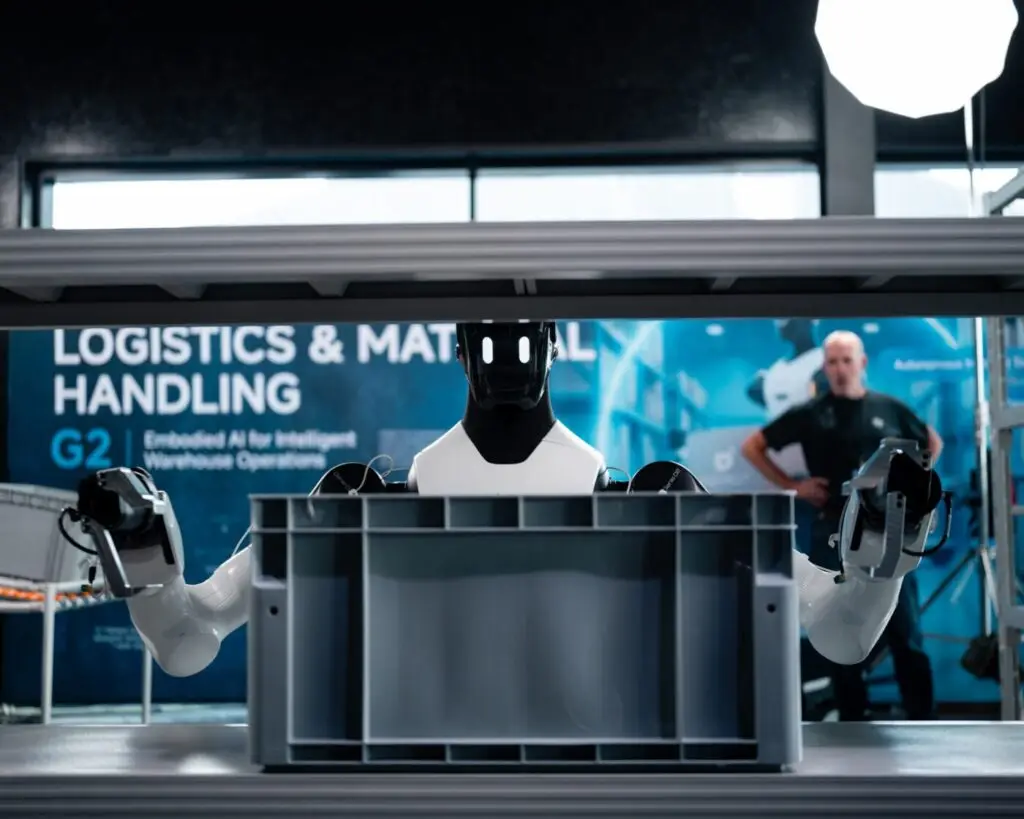
The data was collected with the AGIBOT G2 in real environments. By varying the conditions around the same goal, a model learns the relationship between the goal, the current situation and the consequences of earlier actions.
A foundation for AGIBOT's next models
AGIBOT is already using the dataset to train its upcoming Agent framework and next-generation foundation models. It builds on GO-3 Preview, the model that lets robots keep learning on the job, and Genie Studio 2.0, the platform for building and managing robot tasks.
The dataset is available on Hugging Face under a Creative Commons non-commercial licence (CC BY-NC-SA 4.0), making it freely available for research and education.
What does this mean for the Benelux?
A robot that can reason needs fewer fixed scripts and copes better with a workplace that changes every day: a reception desk, a hotel corridor, a shop shelf or a warehouse. For organisations, that means fewer engineering hours per new task and a shorter path from pilot to everyday use.
For universities and universities of applied sciences, an open dataset with real robot data is also a strong starting point for research and courses in embodied AI. Read also how to start programming with a humanoid robot at school.
Our principle stays the same: robots are co-workers, not replacements. A robot that understands what needs to happen takes repetitive work off people's hands, so they have time for the work where they make the difference.
Curious what AGIBOT robots can do for your organisation? Schedule an online meeting or call +31 30 269 0012.
Want to know more about the robots themselves? See every AGIBOT model, price and rental option in the Benelux.