Programming at School With a Humanoid Robot: How to Start
A robot in the classroom is fun. But that is not the reason to invest in one. The Netherlands needs people who can program, deploy and maintain robots. In April 2026, TNO concluded that Dutch manufacturing ranks twelfth worldwide, with 264 robots per 10,000 employees. One of its recommendations is directly about education: continuous learning paths with robotics competencies. A humanoid robot is a broad learning platform for this: programming, sensors, safety and AI come together in one device that shows students straight away what their code does.
Why a humanoid robot?
Students see results immediately. One line of code and the robot waves, talks or colours its LED strip. That makes programming tangible. And it fits the future TNO describes: robots take over standard work, people instruct and correct them. You learn that role by working with robots. The robot is a co-worker, not a replacement, and that holds in the classroom too: it does not replace a teacher, it gives the teacher a powerful teaching tool.
Three lesson levels
- Level 1, discover (lower secondary, pre-vocational technology): students operate the robot with an app and remote control and design a dance in LinkCraft, AGIBOT's visual choreography environment. No code needed, but plenty of thinking about sequence, timing and how a robot comes across to people.
- Level 2, program (upper secondary, technasium, vocational): students write Python with ROS 2. They make the robot talk, gesture, colour its LEDs and read its battery status. A final assignment could be a tour in which the robot greets visitors.
- Level 3, engineering (applied sciences, university, strong technasium groups): students work with camera images, lidar and navigation, and build their own voice assistant with speech recognition and a language model. Ethics, privacy and AI safety come up naturally.
The first assignment
Have the robot greet a visitor: put it in its default standing pose, let it wave, have it say "Welcome to our school" and then colour the LED strip blue. A tip for teachers: let students read the robot's status before they control anything. That way they learn right away that a robot always has to check what state it is in.
Safe and responsible
A humanoid robot weighs around 40 kilos and can fall. With a few fixed agreements you can work with it safely, even with a full class:
- The remote control is the emergency stop and always overrides student software. The teacher holds it during every lesson.
- The robot only walks in a clear zone you mark out on the floor with tape.
- Test new code with gestures, speech or LEDs first. Walking comes only once that works.
- For the AI lesson, choose a route in which your school stays in control of conversations and data. Have the use of speech and camera with minors reviewed by your data protection officer.
Which robot suits your school?
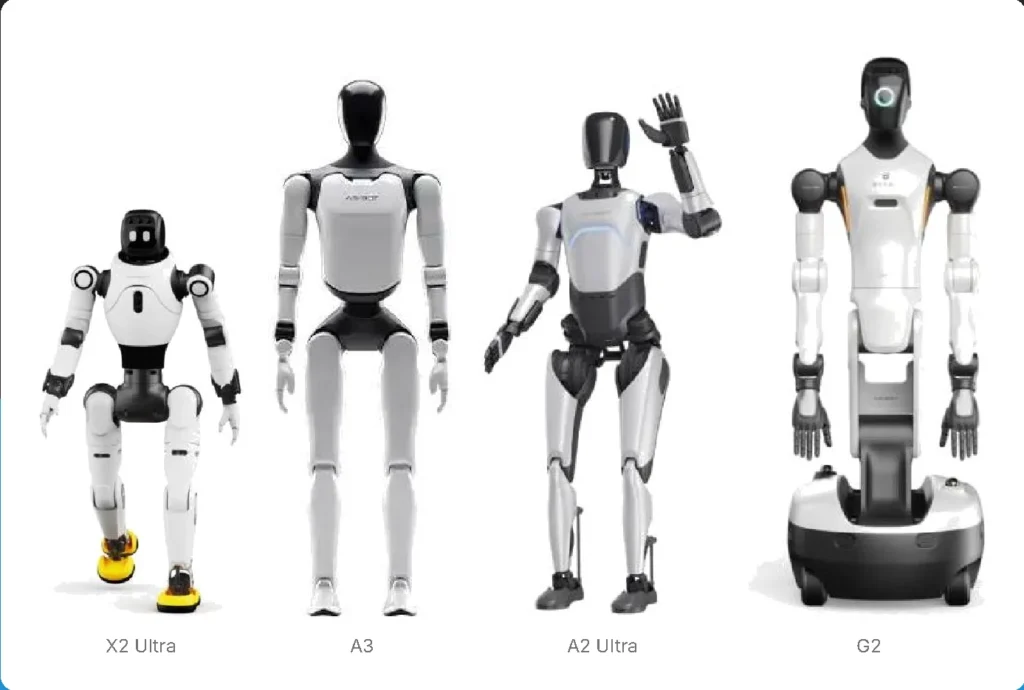
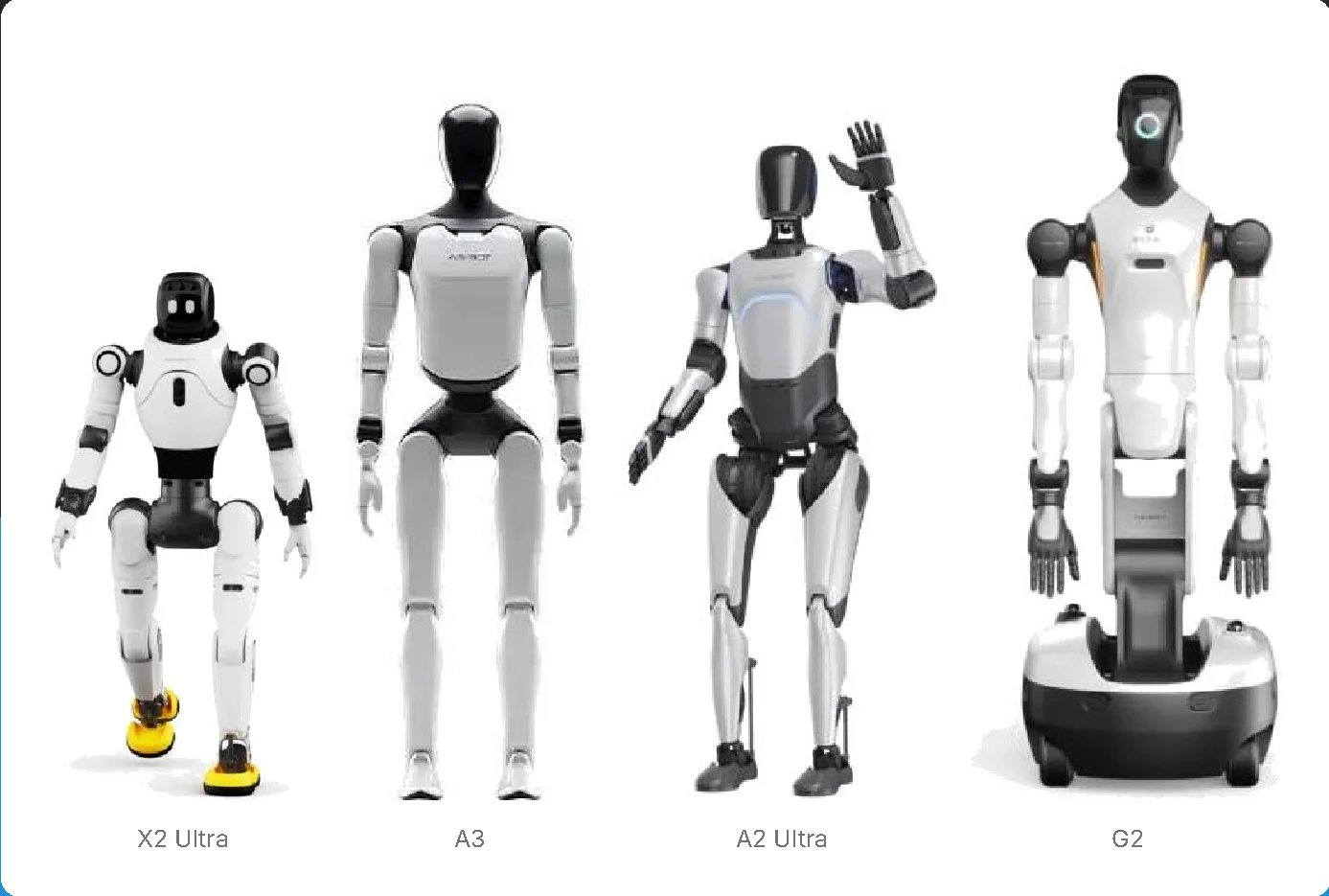
For programming lessons in secondary and vocational education we recommend the AGIBOT X2 Ultra. Only the Ultra has everything a programming lesson needs: its own development computer, all cameras, a movable head and the option to replace the voice assistant with your own AI. For universities, the A3, A2 Ultra and G2 also come into view, depending on the field of study. Not sure? Rent a robot for a week first.
Download the guides
Everything is worked out in two free guides: Agibot X2 in the classroom for secondary and vocational schools, and Humanoid robots for universities. You can also find them on our education page.
Become a pilot school
We are preparing a subsidy application to bring programming with humanoid robots into education. For this, we are looking for schools and programmes that want to take part as a pilot school, from pre-vocational and technasium to vocational, applied sciences and university. Registering is free of obligation and you will hear from us within one working day.
Interested? Register your school as a pilot school.